
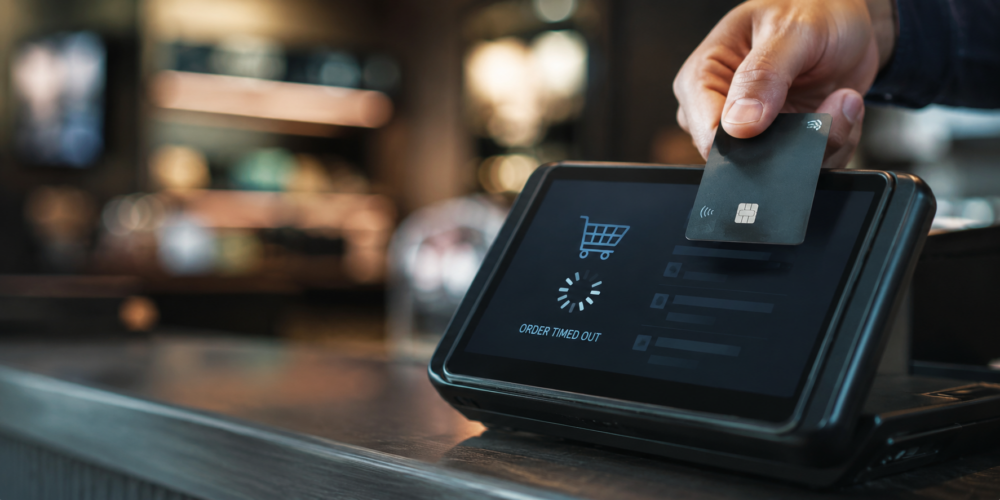
The Hidden Cost of a Retail Cyber Attack Isn’t the Fine. It’s the Downtime.
August 17, 2026 | Encryption, PCI DSS 4.0, Retail
When people picture the cost of a retail breach or cyber attack, they picture the fine. A regulator issues a penalty, the finance team absorbs it, everyone moves on. But ask any retailer who has lived through a serious incident and they will tell you the fine was the least of it. The real bill arrives while the tills are frozen, the website is dark and the shelves are emptying. The hidden cost of retail cyber-attacks is downtime.
Retail cyber-attacks have changed shape
For years, the headline risk was data theft: criminals slipping in, copying card details, selling them on. That still happens. But the most damaging retail cyber attacks now aim for something more disruptive. They shut operations down.
Ransomware is the clearest example. Instead of quietly stealing data, attackers encrypt the systems a retailer needs to trade, then wait. Every hour offline is leverage. And for a retailer, every hour offline is also revenue that never comes back.
The cost of downtime goes beyond lost sales
Lost transactions are only the beginning. The cost of downtime spreads outward, and much of it lands long after systems are restored:
- Customer churn: shoppers who cannot buy from you buy from someone else, and some never come back.
- Competitor gains: during the M&S outage, a major rival openly credited part of a profit upgrade to the disruption, a reminder that your downtime is someone else’s opportunity.
- Operational drag: manual workarounds slow everything from restocking to fulfilment, and teams burn out firefighting.
- Eroded trust: every day of visible disruption chips away at the confidence customers place in your brand.
Put together, these effects often dwarf any regulatory penalty. The fine is a line item. The downtime is a business event.
Why payment and store systems are the pressure point
Attackers go after the systems that hurt most to lose, and in retail that means the machinery behind trading: payments, point of sale, stock and the networks connecting them. Freeze those, and the business stops. It is exactly why so many retail cyber attacks now focus on operational disruption rather than quiet theft. The pain is immediate, visible and expensive.
Reducing the cost of downtime by design
You cannot guarantee no one ever gets in. What you can do is design so that a single intrusion does not take the whole business down with it. That means containing attackers before they can spread, protecting payment data so a breach in one area does not compromise everything, and building systems that keep trading, or recover fast, when something goes wrong.
Resilience of this kind is not a product you bolt on at the end. It is an architecture: strong encryption for payment data in motion, segmentation that limits how far an attacker can travel, and centralised control that lets you respond quickly across every site.
The real lesson
The fine is the part everyone sees. The downtime is the part that threatens the business. Retailers who understand that are shifting their attention from avoiding penalties to staying open, whatever hits them.
Sitehop helps retailers protect payment data across every store and network and keep it flowing safely, so a single incident is far less likely to become a business-wide shut down. To see how protection starts at the edge, read how SAFEcore Edge secures data from the field to HQ.
Keep trading, whatever comes at you. Book a Sitehop demo to see how resilient encryption helps limit the downtime behind retail cyber-attacks.
Sitehop. Engineered for speed. Built for the future.

About Us
Sitehop provides faster, better, greener alternatives to the encryption options on the market today.